


Key Takeaways
- Modernizing data systems is crucial to minimizing financial and operational risks.
- AI and big data tools play a vital role in automating processes and improving efficiency.
- Prioritizing real-time data management and bolstering governance transforms data into a trustworthy business asset.
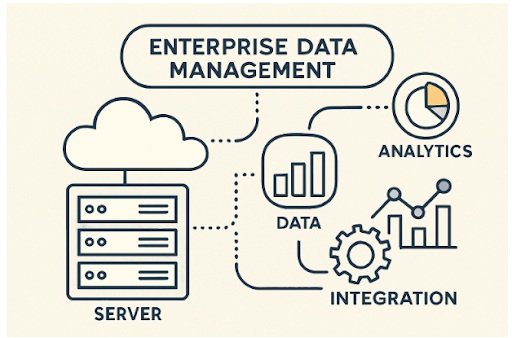
In today’s digital-first business environment, data management stands as a pillar of enterprise success. Companies are under pressure to not only store and secure rapidly growing data sets but also to extract meaningful insights quickly and efficiently. Modernizing approaches, whether by integrating advanced analytics or investing in infrastructure such as an enterprise 1U server, enables organizations to manage critical assets while laying the foundation for innovation and growth.
Effective data management supports informed decision-making, enhances competitiveness, and protects organizations from the risks tied to outdated technology. Enterprises need to continuously adapt their data strategies, embracing technological advancements and balancing operational effectiveness with regulatory compliance. Building robust systems today helps secure resilient operations for the future.
Assessing Current Data Infrastructure
The starting point of any optimization strategy is a thorough evaluation of the current data architecture. Enterprises often struggle with technical debt and legacy systems, which can drain budgets and hinder innovation. According to a recent report, outdated technology leads to annual losses exceeding $370 million for large organizations. This sobering statistic underscores the urgency of updating core systems, replacing siloed databases, and eliminating redundancies to create a streamlined, integrated environment.
Conducting a detailed audit helps pinpoint bottlenecks, assess hardware capacity, and identify outdated software platforms. This information is central to developing a roadmap for upgrading infrastructure, including storage, data pipelines, and key integration points, ultimately enhancing agility and supporting business goals.
Implementing AI and Big Data Analytics
Artificial intelligence (AI) and big data analytics are transforming the way enterprises harness their data. By embedding these tools into daily operations, organizations significantly reduce processing times, increase resource utilization, and lower costs. Recent research suggests that integrating AI into workflows can reduce process cycle times by over 40 percent and cut operational expenses by up to 35 percent, substantially increasing overall efficiency.
AI-powered automation transforms routine data tasks and generates actionable insights from complex datasets, while analytics platforms enable predictive modeling and real-time reporting. As industry leaders increasingly depend on accurate and timely data, these technologies help organizations stay agile and competitive in a rapidly changing landscape.
Enhancing Real-Time Data Management
Real-time master data management (MDM) provides a single source of truth, driving consistency and accuracy across organizational systems. State-of-the-art MDM tools use complex matching algorithms that handle millions of records, optimizing data quality without sacrificing speed or performance. These systems are especially advantageous in industries such as healthcare and finance, where precision and reliability are paramount.
Organizations must also consider the scalability of these real-time systems. As data ingestion rates grow, so too must the ability to process, validate, and distribute this information across diverse applications and teams. Investing in MDM solutions that support seamless integration with cloud services and external data feeds enables enterprises to rapidly adapt to business changes. Furthermore, real-time data integration supports advanced reporting dashboards that dynamically reflect the latest developments, empowering leaders to respond immediately to business opportunities or potential risks.
Addressing Data Distrust
Even with advanced infrastructure and analytics, data distrust remains a barrier to productivity and innovation. Surveys show only a quarter of leaders fully trust their data, and many employees spend up to a third of their time on manual data tasks. Building trust requires data harmonization, transparent governance, and strong validation protocols. Reducing inconsistencies boosts confidence in insights and improves decision-making.
Organizations can also invest in staff training to enhance data literacy, helping teams identify errors early. Regular audits, data quality dashboards, and solid documentation foster trust in data integrity. When employees trust their data, organizations benefit from faster collaboration, better compliance, and more strategic impact.
Leveraging Low-Code/No-Code Platforms
Low-code and no-code platforms are democratizing enterprise data management. With intuitive visual tools, these platforms empower business users to connect systems, transform data, and automate integrations, all without writing code. The result is a marked acceleration in project timelines and an expanded pool of employees capable of handling data-centric tasks. As digital transformation initiatives accelerate, the adoption of such platforms is poised to grow, supporting faster innovation and more responsive business strategies.
Furthermore, low-code/no-code solutions facilitate better alignment between IT and business units. Business users can quickly pilot new data-driven applications and workflows, which IT can then refine and scale, promoting an agile methodology. Enhanced collaboration fosters a more flexible development environment, reducing backlogs and increasing organizational responsiveness to market opportunities and regulatory changes.
Ensuring Data Security and Compliance
As data moves to cloud environments, enterprises face increasing security and compliance challenges. Modern solutions like distributed cloud storage balance replication and deduplication to optimize access and costs. Prioritizing encryption, access controls, and audit trails safeguards data and streamlines storage. Compliance with evolving data privacy laws further protects businesses and builds trust. Besides technology, fostering a security culture through training, clear policies, and risk assessments is vital. A holistic security approach helps enterprises defend against threats, meet regulations, and ensure business continuity in a complex digital landscape.
Conclusion
Modern enterprises must efficiently manage data to stay competitive. By assessing and modernizing infrastructure, adopting AI, ensuring real-time accuracy, restoring trust, using user-friendly platforms, and maintaining security and compliance, they position themselves to thrive. As data volume and value grow, continuous improvement and strategic foresight are vital. Enterprises embracing future-proof technologies and agility can harness data for lasting success in an increasingly data-driven world.
